Understanding Your Kitchen Needs
When it comes to selecting the ideal cabinets for your kitchen, a thorough understanding of your kitchen needs is paramount. The first step in this process involves assessing your cooking habits, family size, and the overall design style of your home. These factors will play a crucial role in determining the type, style, and functionality of the cabinets that will best suit your kitchen.
Consider your cooking patterns. If you are an avid home cook who often prepares large meals, you may require a cabinet layout that maximizes storage space for pots, pans, and other cooking essentials. This could include deeper cabinets to accommodate larger items or specialized storage solutions such as pull-out shelves and lazy Susans. On the other hand, if you have a smaller family or primarily prepare quick meals, you might prioritize a sleek and minimalist cabinet design that complements your lifestyle.
Your family size also influences your cabinet choices. Larger families often benefit from more storage to accommodate additional cookware, dishes, and food supplies. In contrast, smaller households may opt for fewer, more stylish cabinets without sacrificing functionality. Additionally, think about your aesthetic preferences; choose a design that not only meets your storage requirements but also aligns with your overall interior style, whether that be modern, traditional, or contemporary.
Lastly, evaluating the available space in your kitchen is imperative. Measure the dimensions of the room to identify any limitations that may affect cabinet size or configuration. Consider how cabinet placement will impact workflow and accessibility; for instance, cabinets should not hinder movement in frequently used areas. By carefully assessing these factors, you can make informed decisions that ensure your kitchen cabinets enhance both the functionality and beauty of this important space in your home.

- Large Storage Space Cabinet: The buffet cabinet incorporates both open and closed storage space to meet your different n…
- Multi-functional Sideboard Cabinet: With a versatile design and a large amount of storage, this practical piece of unit …
- Modern Farmhouse Design Cabinet: Marring an impressive wood grain surface with white finish, the sideboard buffet with s…
Exploring Different Cabinet Materials
When it comes to selecting the best cabinets for your kitchen, understanding the different materials available is crucial. Kitchen cabinets are often constructed from a variety of materials, each with its unique properties, advantages, and disadvantages. The most popular materials include solid wood, plywood, medium-density fiberboard (MDF), and laminate.
Solid wood stands out for its natural beauty and durability. It offers a classical aesthetic that can enhance the overall ambiance of a kitchen. However, solid wood can be susceptible to warping and damage from moisture, making maintenance essential. The cost of solid wood cabinets is typically on the higher side, reflecting their premium quality.
Plywood is another popular option due to its strength and resistance to warping, making it suitable for various climates. It consists of thin layers of wood veneer glued together, which provides excellent stability. While plywood is usually less expensive than solid wood, it can still provide the rich appearance of wood at a lower price point. Regular maintenance, such as cleaning and proper sealing, is necessary to extend its longevity.
MDF is an engineered wood product made from wood fibers, wax, and resin. It offers a smooth surface that easily accepts paint, making it a preferred choice for homeowners looking for versatile finish options. MDF cabinets are generally more cost-effective than solid wood or plywood; however, they may lack the same degree of durability and resistance to moisture, making caution necessary with exposure to water.
Lastly, laminate cabinets are built from a composite material layered with a plastic laminate surface. This option is often the least expensive and offers a vast array of colors and patterns, allowing for customizable designs. However, laminate may not be as durable as wood options, as it can chip and scratch easily, requiring extra care and maintenance.
Understanding these materials’ specific benefits and drawbacks will empower homeowners to make informed choices tailored to their preferences and budgets.
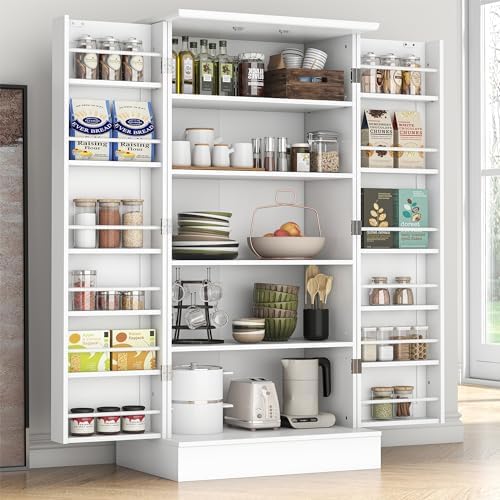
- 🍗🥃【Large Storage Space】This pantry cabinets measure 24″W x 16″D x 47″H (60 x 40 x 120 cm) , features a multi-level shelf…
- 🍗🥃【Stable & Environmental Friendly】This freestanding kitchen pantry storage cabinet, made of fiberboard, have an elegant…
- 🍗🥃【Fashion Unique Design】This white pantry organization and storage has an elegant and smooth white finish and beautiful…
Cabinet Styles and Finishes: What to Consider
When selecting cabinets for your kitchen, it’s essential to consider both the style and finishes to ensure a harmonious match with your existing decor. Each cabinet style offers distinct characteristics that can significantly impact the aesthetic appeal of your space.
Traditional cabinets typically feature intricate designs and ornate detailing, often utilizing solid wood and a rich finish that exudes warmth and elegance. They can complement classic design elements such as crown molding and raised panel doors. On the other hand, modern cabinets embrace minimalism, focusing on clean lines and a sleek profile, often made from materials such as plywood, engineered wood, or metal. This style can be paired beautifully with a contemporary kitchen incorporating stainless steel appliances and minimalist decor.
Farmhouse cabinets combine rustic charm with functional design, characterized by distressed finishes, shaker-style doors, and natural wood tones. This style creates a cozy and inviting atmosphere, making it well-suited for kitchens where family gatherings often occur.
Finishes also play a pivotal role in the overall aesthetic of your kitchen cabinets. Stained finishes enhance the natural beauty of the wood grain, while painted options provide a versatile palette to suit any theme, from crisp whites to bold colors. Glazed finishes give depth to painted cabinets, adding a touch of sophistication through a distressed or antiqued look. When deciding on finishes, consider how they coordinate with your countertops, backsplash, and flooring. For a cohesive design, aim for balance; if your cabinetry is a bold color, pairing it with subtle hardware can achieve a refined presentation.
Ultimately, choosing cabinet styles and finishes is about reflecting your personal taste while ensuring the functionality needed for daily kitchen activities. With thoughtful consideration, your cabinets can enhance not only the appearance of your kitchen but also its usability.
Budgeting for Your Kitchen Cabinet Renovation
Establishing a realistic budget for your kitchen cabinet renovation is crucial to ensure your project runs smoothly and stays within financial limits. The first step in this budgeting process is to assess your overall kitchen improvement goals. Identify which aspects are most important to you, such as cabinet materials, style, and features. Prioritizing these elements will help you allocate your funds more effectively.
Next, research the market to get an understanding of the costs associated with different types of cabinets. Custom cabinets, for example, tend to be more expensive than pre-made options, yet they can significantly enhance your kitchen’s functionality and aesthetics. Consider exploring alternatives such as semi-custom cabinets that offer a balance between price and personalization. Look for high-quality materials like plywood or hardwood, which may come at a premium but will offer durability over time.
Another strategy for effective budgeting entails looking for seasonal sales and discounts. Many retailers offer periodic promotions that can lead to substantial savings. Planning your purchase around these sales events can help you secure a better deal without compromising on quality. Additionally, be open to considering floor models or slightly damaged inventory that can be sold at a discount while still providing excellent value.
If your budget is tight, exploring financing options may also be beneficial. Some retailers provide financing plans with low or no interest for a predetermined period, allowing you to spread out your payments. Be cautious and ensure that you read the terms to avoid overspending. By carefully evaluating your priorities, shopping strategically, and exploring financing possibilities, you can achieve your kitchen cabinet renovation goals without exceeding your budget.